Ring-tum Phi Alumni Edition
/Here’s a Flipbook of the Ring-tum Phi Fran, Nancy, Shelly and I put out for our college reunion.
Here’s a Flipbook of the Ring-tum Phi Fran, Nancy, Shelly and I put out for our college reunion.
I'm happy to have located this, and I wanted to upload it just in case the original ever goes missing again.
I hope they still make elementary school students interview their grandparents. I interviewed both my paternal and maternal grandparents for different school projects, and picked up a lot of great perspective and stories from them.
When I interviewed Poppy and Mom-Mom (my maternal grandparents), Poppy talked a lot about World War II. Toward the end of the interview, though, Mom-Mom told me her maiden name was Chapman and that we were related to John Chapman, "Johnny Appleseed" of lore.
Not long after, she sent me a letter with some information. It's one of the few examples beyond old birthday cards and such that I have of her handwriting. She died in June of 1984.
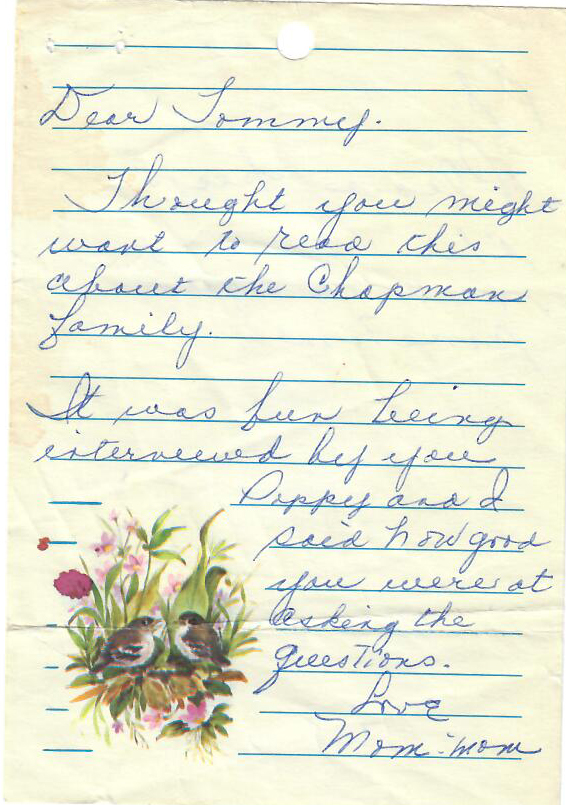
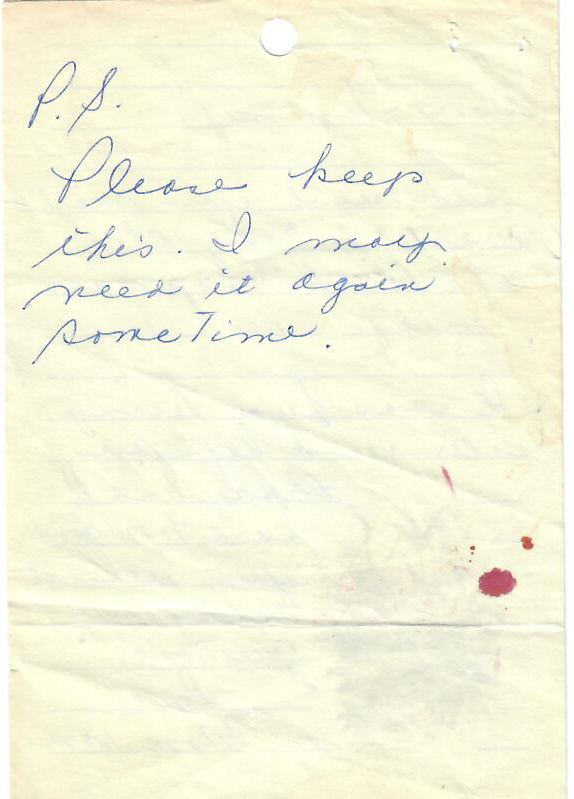
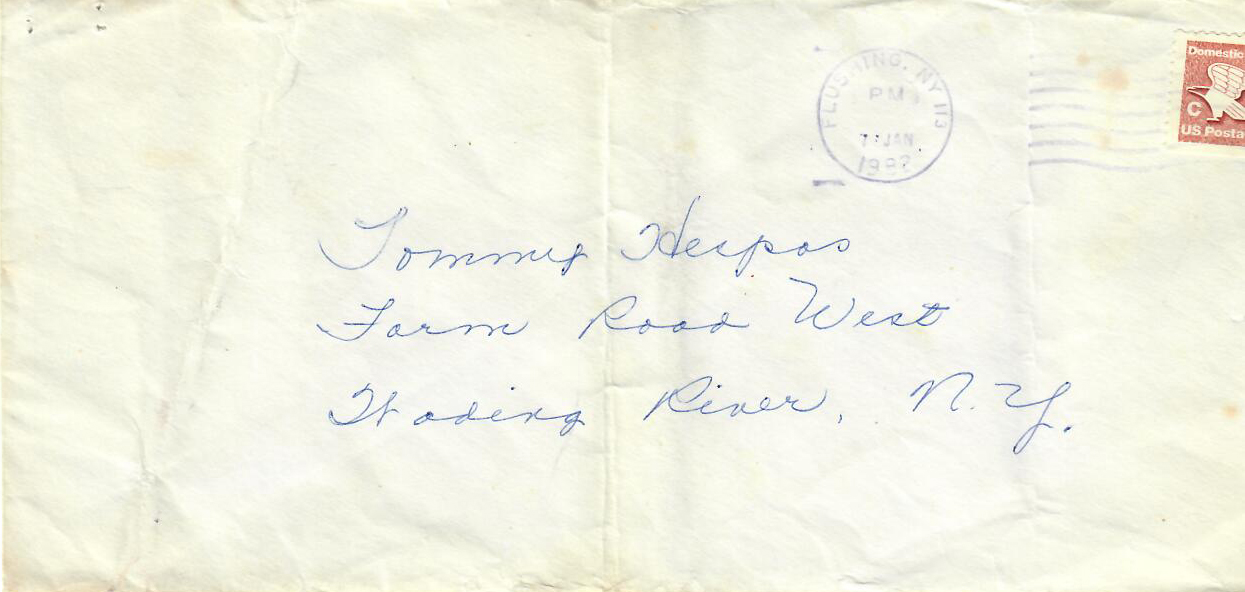
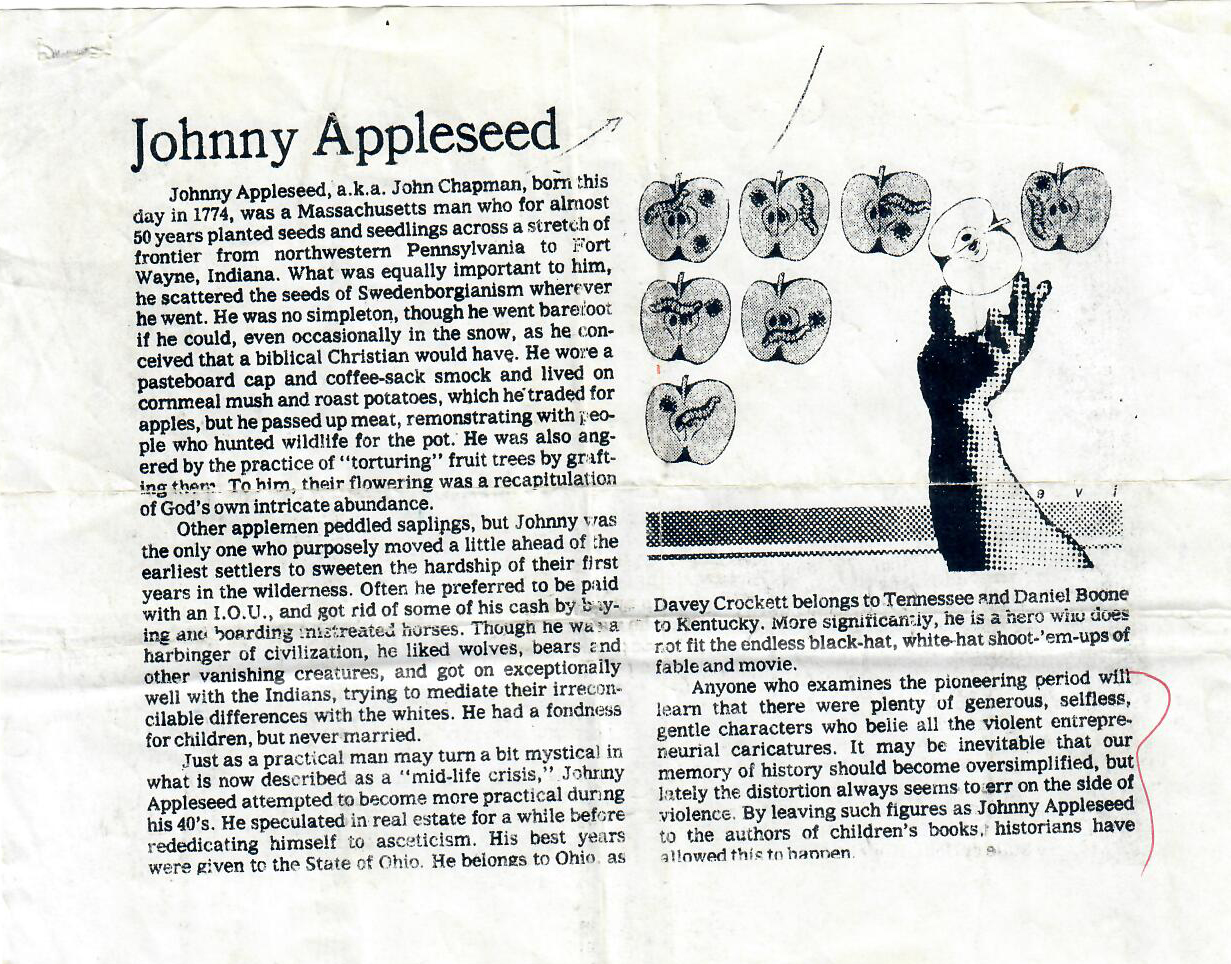
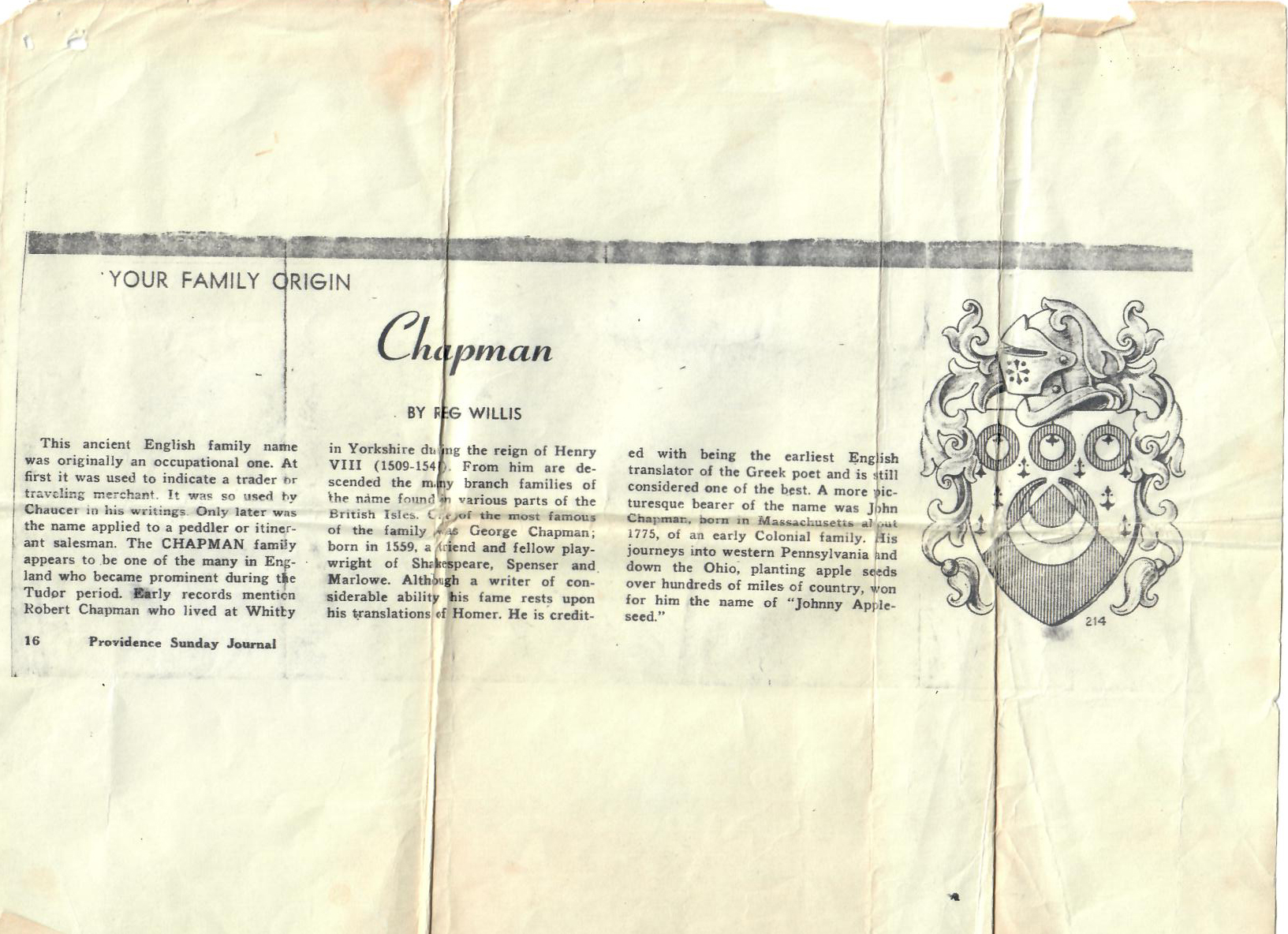
Click to scroll through the images.
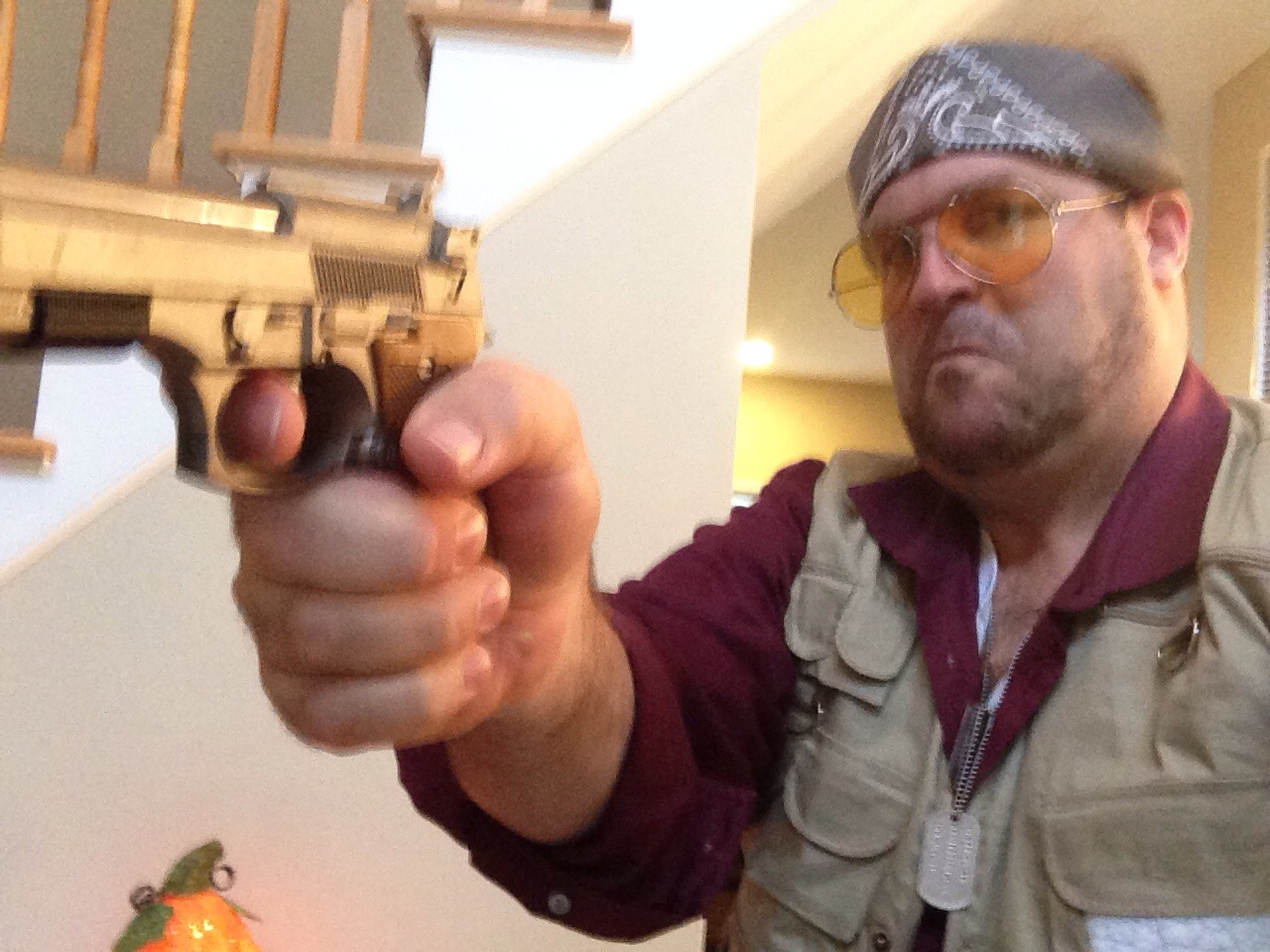
With an armed population, a tyrannical government will think twice.
At least, that’s the logic many gun owners cling to – that their investment in weapons is somehow keeping the Federal Government from undermining civil liberties. That one day, the government troops will come to deprive a patriot of his property and his rights, and the guns give him an option to defend himself on his own terms, or perhaps to go out in a blaze of glory.
An armed populace might give the British soldier of the late 18th Century pause – the redcoat who might show up to illegally quarter troops in a colonial home, armed with a flintlock pistol and sabre while his troops lean on muskets and such. That guy might have concerns about the hunting rifle or shotgun mounted over the hearth.
But today’s Federal Government? Mobilize an entire state’s worth of people with their family firearms. Heck, give ‘em 50 cals and illegally modified AR-15s if you want. Ain’t nobody imposing its will on the modern Federal Government that way, even if they march down the streets of Washington, D.C.
If push came to shove, what would the feds throw at an armed insurrection? The remote control drones that can level mountains? How about that cool machine that you aim at people and it instantly gives everyone in the crowd a case of explosive diarrhea? Or that other machine that uses microwaves to inflict searing pain without actually damaging tissue? Bombs? Tanks? Fighters that cost hundreds of millions of dollars apiece? Take your pick from all of the cool stuff supplied to a military funded at levels that allow it to simultaneously fight two remote conflicts overseas and still win. You’re talking about a military that has to offload armored vehicles to municipal police departments because it’s got way cooler shit and doesn’t want a surplus of gigantic IED-proof MRAP trucks sitting on its books.
That kind of military laughs at your pieced-together-from-parts-you-bought-on-the-Internet illegally-modified AR-15. What kind of resistance do you think you’ll put up in the highly-unlikely scenario that the government decides to turn that kind of weaponry on its own citizens?
I can tell you who IS afraid of your little cache of arms, though. Your fellow citizen.
And with good reason. Your fellow citizen has taken note that while you’re not going to give the U.S. Armed Forces a run for its money, you do still have the power to murder a few dozen of your fellow Americans before someone with the firepower to stop you can respond. Your fellow Americans understand that the power of the individual to violently end multiple lives has increased in modern times (a notion excellently highlighted by this video: https://www.youtube.com/watch?v=LORVfnFtcH0) while simultaneously being outpaced by the power of the military.
In practice, we’re not seeing governments being kept in check, but we are seeing body counts from mass shootings increase. The “protecting against tyrannical governments” argument for unfettered access to firearms hasn’t been valid for a long time. Yet, would-be armed patriots are still entertaining the fantasy of going out in a blaze of glory when the gummint shows up to deprive them of life and liberty.
Does that fantasy justify the absolutist stance many Americans take with regard to the Second Amendment? When we're quick to accept non-absolutist thinking when it comes to other freedoms afforded us by the Bill of Rights? (As an eloquent person put it earlier today, we recognize we can't falsely cry "Fire!" in a crowded theater, yet we steadfastly defend the right to allow people who would fire ON that theater to buy guns.)
I own rifles and shotguns and use them responsibly for sport. But I certainly don't think firearm ownership is keeping the government's mitts off my freedom. I'm not interested in being in anybody's cowboy movie.
Let's stop entertaining the fantasy and enact some sensible gun control laws.
So, for those who don't know, I'm adopted.
It's never been something that's been a big deal in my family. Mom and Dad were very upfront about it when I was little, explaining that they loved me so much that they flew to Florida when I was born so they could bring me back to Smithtown to be their child. It's thanks to this straightforward approach that I'm not pulling a Skippy Handleman, and it's never been any kind of issue.
I've never had any sort of desire to reconnect with my birth parents in any way. Knowing I was adopted never sent me on any sort of bloodline quest to find out if I was a prince of a small island nation or David Lee Roth's kid or anything like that. I was curious, but not to the extent that I'd start digging through microfiche and old newspapers.
Years ago, I found documentation pertaining to my adoption rummaging through my parents' stuff when I was bored one day. That find gave me a few basic facts, including my place of birth, my parents' ages, my ethnicity and my birth mother's name. This sat with me for years. Again, I really had no desire to launch a search or to reconnect, especially knowing that my birth mother was 15 at the time and my birth father was 17. Simply put, my curiosity wasn't enough to overcome any potential negative feelings regarding digging up the past.
Flash forward a couple decades. I'm now 45. The lack of any kind of family medical history is starting to become really inconvenient. Typically, I'm a fan of going to the doctor only when something is drastically wrong, and I went through most of my twenties and the better part of my thirties not going to the doctor unless I needed to go to the emergency room. Not for checkups, not really for anything.
But now I'm going to the doctor regularly. Docs have been asking questions for the past several years. When I fill out a medical history questionnaire when switching PCPs, there are whole sections I can't fill out - questions about cancer, hypertension, diabetes and heart disease. And it's starting to get scary that I don't know the answers to these questions.
In the meantime, doctors have started defaulting me to testing protocols that assume the worst case. The frequency with which they want me to go get inflated like a balloon to check for colon cancer is both alarming and inconvenient.
What do I tell my kids? Doctors want to know about their family history of allergies, diseases and whatnot, and my wife can give them visibility into whatever they want to know about her side of the family. And my side is a big question mark.
My wife got me one of those Ancestry.com DNA kits recently. I sent it in. The results came back two days ago.
Ethnicity-wise, there aren't any surprises. My adoption documentation explained that I was English, Welsh and Irish. And my DNA test says I'm 98% Western European, breaking down like this:
So yeah, no big surprises. The only surprise came when we got to the section about possible relatives.
There's a guy. Ancestry.com describes his relationship to me as "Close family - 1st cousins" and lists their confidence as "Extremely high."
There are other potential relatives, but described as 2nd-4th cousins and more distant, with varying levels of confidence.
I reached out to the potential first cousin. He responded within a couple hours, despite not having logged on in months. I told him a little bit about myself and what I know from my adoption papers, including my birth mother's name. I'm awaiting a response.
Again, my primary motivation for doing this is to get some medical background. If the males in my family tend to die in their 50s from heart attacks, that's something I'd like to know at this point in time, before my doctors have to assume the worst when it comes to genetic predisposition.
It would be nice to know a little about other aspects of family history, but at this time, I'm really not looking to reconnect with some lost family somewhere. All things said and done, things have turned out well for this product of what was clearly an "oops" between two high schoolers.
The personal site of Tom Hespos.
RSS FEED
RECENT POSTS
BLOG ARCHIVE
SOME FAVORITE PICTURES