Tagged

Jetpacks tagged me yesterday afternoon, which means if I feel like playing nice and not being a dick, I have to reveal certain facts about myself that folks might not ordinarily know.  Here goes:

  1. I grew up in Wading River on Long Island, a hamlet that bills itself as "The Gateway to the Hamptons."  Really its claim to fame was that it was the site of the former Shoreham Nuclear Power Station.  The SNPS pumped a lot of money into the local school district in the form of PILOT payments.  This enabled my little public school to do insane things like send middle schoolers to Hawaii to study flower bulbs, have a circus arts program, and own a state of the art mainframe in the early 80s.  This is the genesis of my interest in computers - I learned to program in BASIC, Fortran and Pascal there, and even took the AP Computer Science test in Pascal back in the day.
  2. In addition to being a marketing guy, I am a fairly decent plumber, owing to having spent every summer from 1983 until about 1994 working for my dad's lawn sprinkler business.  I like to keep that quiet, because when people find out I know something about their pipes, they call me at 2 AM when their toilet breaks.
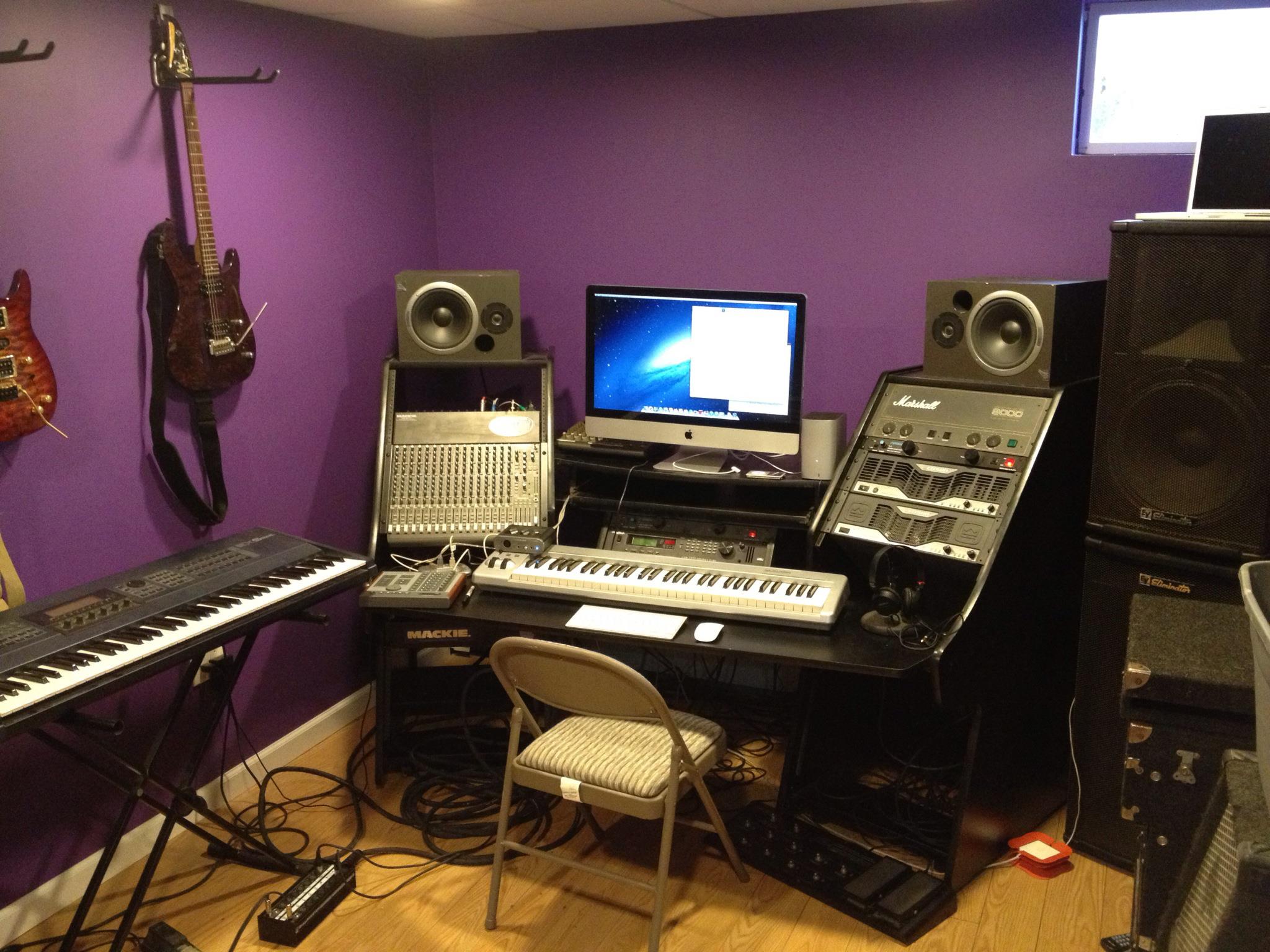
  3. I took classical piano lessons from the time I was five until I left for college.  Like most kids, though, I rebelled.  After switching teachers, I started learning popular music of the day.  So the 13 years of piano lessons my parents paid for leave me only with the ability to play cheesy heavy metal ballads after I've had too much to drink.  I have perfect pitch, so even to this day you'll see me listening intently to something on the radio, coming home to my piano, and playing a reasonable facsimile of what I heard earlier.  I also taught myself how to play guitar when I was in high school.
  4. I am a geek of the first order.  I played Dungeons & Dragons for years growing up.  I love video games.  I'm a member of American Mensa and very frequently geek out with crossword puzzles, Sudoku and other brain teasers.  Back in the early 80s, I trolled the original Compuserve BBS on my Commodore 64 trying to figure out ways to break the copy protection on C-64 games.
  5. I am a reformed conservative, having graduated (barely) from one of the most conservative schools in the country.  Upon returning to New York, I gravitated back toward my liberal/libertarian roots and became a Democrat again.

Okay, I tag the following bloggers:

  1. Brad Berens - Because we're getting to be great friends, and we'll be better friends when he reveals some embarrassing facts about himself.
  2. Rick Bruner - Because the guy rides a unicycle, and if he's willing to reveal that publicly, he'll probably also reveal some other interesting stuff.
  3. Rob Burke - Because he's a new client and needs the blogging practice.
  4. Tig Tillinghast - Because Tig is interesting as hell, and I want to know more.
  5. JTA - Because we were childhood friends, and I have no idea what he's been up to since, oh, 1989 or so.

Check 21: Good for bank customers?

It's been more than two years since Check 21 legislation passed in the U.S., and what has it done for bank customers?  Not commercial customers, mind you, but folks like you and me who have regular checking accounts with or without online bill paying. Take me for example.  I pay the vast majority of my bills online and write only one or two checks a month.  I have direct deposit for my paycheck, but also collect several checks a month from my writing gigs and other sources of income.  What has Check 21 done for me?
Let's look at the accounts receivable end for a sec.  My paycheck (almost) always hits my account on payday.  No real issue there, but when I get checks for deposit, out of state checks still take five business days to clear.  In-state checks typically take 3-5 days (usually closer to five).  The float period hasn't changed one bit from the time this legislation passed.

As for the accounts payable end, as I mentioned I tend to pay my bills online.  I write one check a month.  Everything else is electronic.  As soon as I send an electronic payment, that money comes out of my account immediately.  So the bank is getting more of a float period on my money than it would if I had used a check.

Now, let's take a look at what benefits the bank gets from Check 21:

  1. The costs for shipping physical checks from location to location is greatly reduced, since Check 21 created a new negotiable instrument that can be transmitted electronically.  There's also some savings for the banks built into the notion of not having to give me canceled checks with my statement anymore.
  2. Banks take money out of the hands of the customer sooner (see above) and hang onto it for the same length of time before clearing it to the receiving party, so they're getting a longer float period and thus, more money.
  3. Deposited checks take the same length of time to clear, but the electronic transmission happens much faster, so banks get to hang onto money longer, get a longer float period, and thus get more money

With all of this extra money and more efficient processing in the hands of the banks, you'd think customers would see decreased fees, faster clearing of deposits and better service.  Anyone seeing that?  Not me.  The deposit line at my bank today was at least two dozen people deep, and took half an hour.  My bank fees have increased, not decreased.  It still takes the exact same length of time for banks to give me access to a deposit.

So somebody please explain to me how Check 21 was anything but a giant gift to banks.  They're making more money.  We're stuck with the same (or worse) level of service.

One of the things I'm learning running a small business is that the invisible hand of capitalism can't always be counted on when one of the forces working against it is institutional inertia.  If banks, as an industry, are used to making money the way they do, a reduction in their costs of doing business often isn't enough to guarantee that customer service will improve or that savings will be passed on to the customer.

A parallel can easily be drawn to the advertising industry.  Agencies and marketers alike know that greater efficiencies can be had by revamping advertising plans to include a higher percentage of online advertising.  Do all companies do this?  No, because they're combatting institutional inertia - it's more profitable to go with the status quo until it becomes a distinct competitive disadvantage to continue to avoid change.  There's always a sizeable gap involved between the time an efficiency is identified and when it becomes reality, and that's largely driven by institutional inertia.

So how long will it be before banks start passing on the savings and profits they're getting due to Check 21?  Will it take as long as it took online advertising to hit its stride?  10 years?  15 years?  More?

Get to Harrow's If You Can

Harrow's is in Chapter 11.  Lauren and I dropped in on two of their stores over the weekend for their liquidation sales.  At the first store on Sunrise Highway, we found a couple deals but literally had an outdoor table we were interested in sold out from underneath us.  So we headed over to a store on Middle Country Road and found a great deal on some patio furniture, which we hauled home in my truck. We couldn't find any reasonably-priced grills, but there seems to be a good deal of patio furniture and holiday decorations left.  Get over there if you're looking for some deals on outdoor furniture.