Dumped On!

snoquad.jpg

We're getting simply pummeled by snow right now.

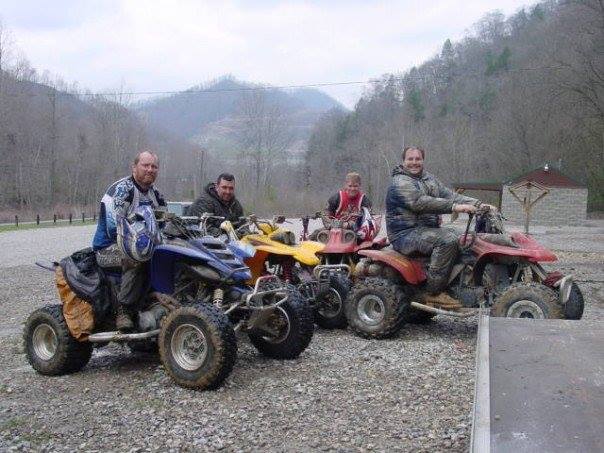
Craig swung by to pick up Rob and me around 3 PM. Rob and I did some woods riding while he got used to riding a quad again, and Dennis and Craig hit some other trails. After about an hour, Rob had had enough fun and decided to head home. I met up with Craig and Dennis and we did some more woods riding.

It wasn't long before the woods trails became buried in deep snow and we started moving out to the surface streets. Despite a state of emergency declared in Suffolk County, there were still quite a few folks out in cars. But most of the vehicles we did see on the streets were plow trucks and large 4x4s.

Some of the parking lots had at least 6 inches by 5 PM. We made a circle track in one of them (see pic).

By around 6 PM, the snow was starting to get too deep on the surface streets for even the quads. We were making it up hills, but fishtailing all over the place. We started to see snowmobiles out and about as well.

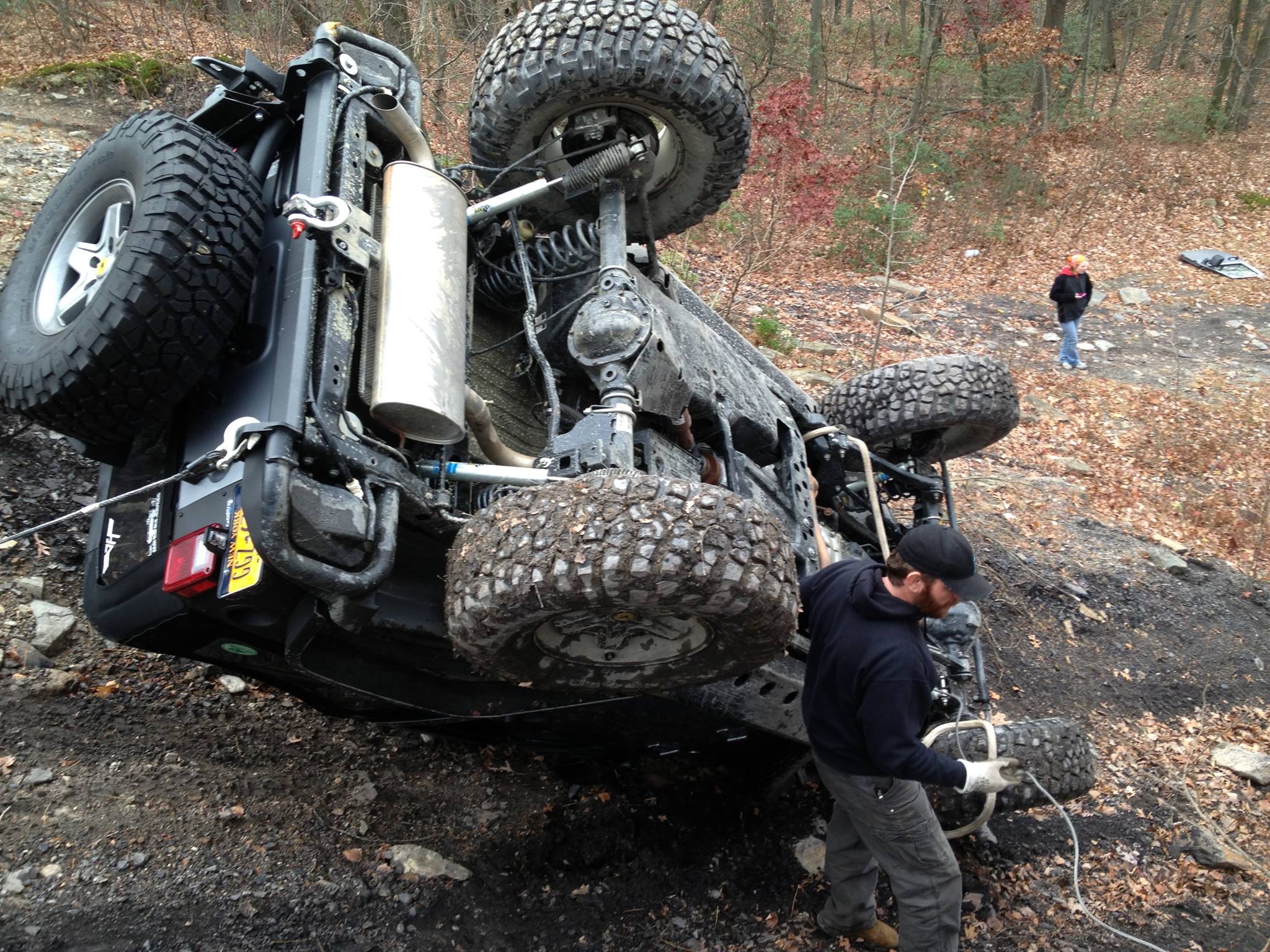
Craig had a bit of a nasty spill barreling down one of the back streets. He went from a plowed area into an unplowed one with a big snow drift and flipped over. Fortunately, he was okay.

I went outside briefly a few minutes ago and I can't see the birdbath on the front lawn. I'm wondering how I'm going to get to work on Monday... The snow is not supposed to stop until after sundown tomorrow and I wouldn't even THINK of trying to take a car out in the snow that's already on the ground.

We put some de-icer down on the driveway before the snow started up, so hopefully that should make shoveling tomorrow not as bad as it might otherwise be.

I have some big client meetings and things due on Monday. Looking out the window right now, I can't help but think I don't have a prayer of making it out of here and I might have to work from home. I guess we'll see what tomorrow will bring... (Other than getting in some more riding time, I mean.)

A Realistic Approach to Looking at Terrorism

I'm noticing a trend in mass media coverage of terrorism - one that's quite disturbing. In examining how safe Americans typically are, the mainstream press tends to look at weaknesses in our security in everyday life. How safe are our trains, airplanes, water supplies, and other everyday things? And we should be looking for weaknesses in our current systems. It's healthy and it makes sense.

But there's a big piece missing. What I don't see a lot of is analysis on the likely methods that terrorists could use to have maximum impact here in the U.S. given their resources. We seem to be concentrating too much on security exploits in our current systems, losing sight of how effective a terrorist could be in exploiting those systems.

A good example would be the whole "blinding airline pilots with lasers" scenario. Yes, pilots can be blinded by lasers, but the investments required as well as the dependability of the method makes this an unattractive option for someone who wants to have maximum impact with comparatively little investment.

Think about it. There are too many variables - too many things that could go wrong along the way. A terrorist would have to invest in a commercial laser, a tripod and possibly some electronic aiming gear in order to have a reasonable chance at success. Wouldn't it make more sense for a terrorist to invest that time and training in acquiring black market weapons?

I think we identify where the risks are when we start with a zero base approach - putting ourselves in the shoes of the terrorist and looking at what is easily and reliably exploited with the resources terrorists are likely to have available.

We can start by asking ourselves where our security is most easily exploited. Some would say the fact that only a small percentage of shipping containers entering the country are adqeuately searched and screened is something that immediately comes to mind when we think of inadquate security. When we think further about what's riding on this lax port security, we realize that shipping is critical to our economy and that ports tend to be in areas that are filled with people and businesses. A well-placed dirty bomb or worse could cause not only immediate loss of life, but a blow to the economy and to an entire system that our economy depends on for long-term stability.

What makes more sense to you? That a terrorist already in the U.S. would opt to try to bring down an airplane with a laser? Or that a terrorist not yet in the United States would use an unscreened shipping container to deliver a bomb right to our doorstep? To your thinking, what has the greater chance of success? What requires the least amount of resources to accomplish the most damage, both in terms of human lives and economic impact?

Our efforts against terrorism require smart deployment of resources. After all, we can't make everything 100 percent secure overnight. But we hope to make use of what we have to reduce our exposure appropriately. That means making tough but intelligent choices about the allocation of manpower, capital and other resources. To do that, we do need to examine the weaknesses in our current systems, but we also need to look at the big picture and avoid things like expending too much time and effort on patching security holes that are relatively less easy or effective to exploit.

It's all about priorities, people.

Across Traditional Lines

I've been noticing something lately that leads me to believe that perhaps the country isn't as divided along traditional conservative/liberal/libertarian lines as we might like to think. Well, actually I can't say that, because my circle of friends and acquaintances is not exactly representative of the U.S. population or anything. I guess the lesson might be "You can't judge a book by its cover." Somebody I used to think was ultra-conservative launched into two separate tirades recently about justifications for the war and lack of accountability in the Abu Ghraib and Gitmo scandals.

Somebody I used to think was ultra-liberal told me she sees merit to the "freeing the Iraqi people from a ruthless dictator" justification, even though she knows that wasn't the original justification for the war.

Somebody I used to think was steadfastly libertarian told me that he thinks the government ought to break up media monopolies for the sake of accuracy and balance in news reporting.

And then there are friends I used to avoid discussing the war with. I used to avoid it because I didn't think they cared much, or that they weren't interested enough in the news to formulate opinions based on what they had read about. You'd be surprised. Some of these folks really do want to discuss the issues and even though the budget deficit or education or welfare reform aren't topics they have a strong opinion on, they do have strong opinions about the war.

It's like that Bloom County cartoon from many moons ago, where Opus is at a bar talking to this conservative looking farmer-type guy in a flannel shirt who ends up spouting a bunch of typical liberal rhetoric. Then some hippy guy on the other side of the bar yells, "America! Love it or Leave It!"

I guess I should be encouraged about this. I'm not running into too many people who aren't opinionated in some way about the war. And it looks like my friends are reading and watching the news a whole lot more than I might have expected.

Contrasting the Past Election with Clinton/Bush I

I'm more than halfway through Bill Clinton's biography. I was particularly intrigued by how Clinton described how Bush I's lowballing of the deficit tripped up his economic plan somewhat. But it occurred to me that Clinton was able to explain essentially what he wanted to do in a very simple fashion that even someone like me, with little experience beyond Econ 101, could understand. And then it occurred to me that this was one of the things that was missing from the discussion and debates in the last election. Kerry made plenty of stink about how we went from a huge budget surplus to a huge deficit, but I didn't hear specifics about how he wanted to address this if elected. I thought that perhaps, if Kerry was able to explain what he wanted to do with the economy in a way that was as simple as how Clinton explained his own economic plan, things may have turned out differently.

Instead, the Bush II administration was able to take potshots at Kerry by harping on the absence of a realistic plan. Clinton was able to get people to understand what was important about cutting the deficit and making investments at the time. Kerry wasn't nearly as effective. With America just starting to pull out of a recession, maybe the Dems could have pulled some additional votes by explaining their economic policy in real-world terms that highlighted just what the benefit would be to the middle and working classes.