Dear Joseph:
You asked me for some audio commentary for Across The Sound. I'm happy to oblige. Please copy this link into your browser, download the file and play it through iTunes:
http://www.hespos.com/Noise_for_Jaffe.mp3 (Note: I changed this link to link to an MP3 file rather than a .m4a file.)
As I mentioned in my earlier e-mail, it's sort of a Limp-Bizkit-meets-Beastie-Boys kinda thing. As a song, it's a joke. (I can't picture Fred Durst or Mike D getting as worked up over broadcast-model advertising as I am.)
Putting any commentary on my actual musicianship aside, consider the following:
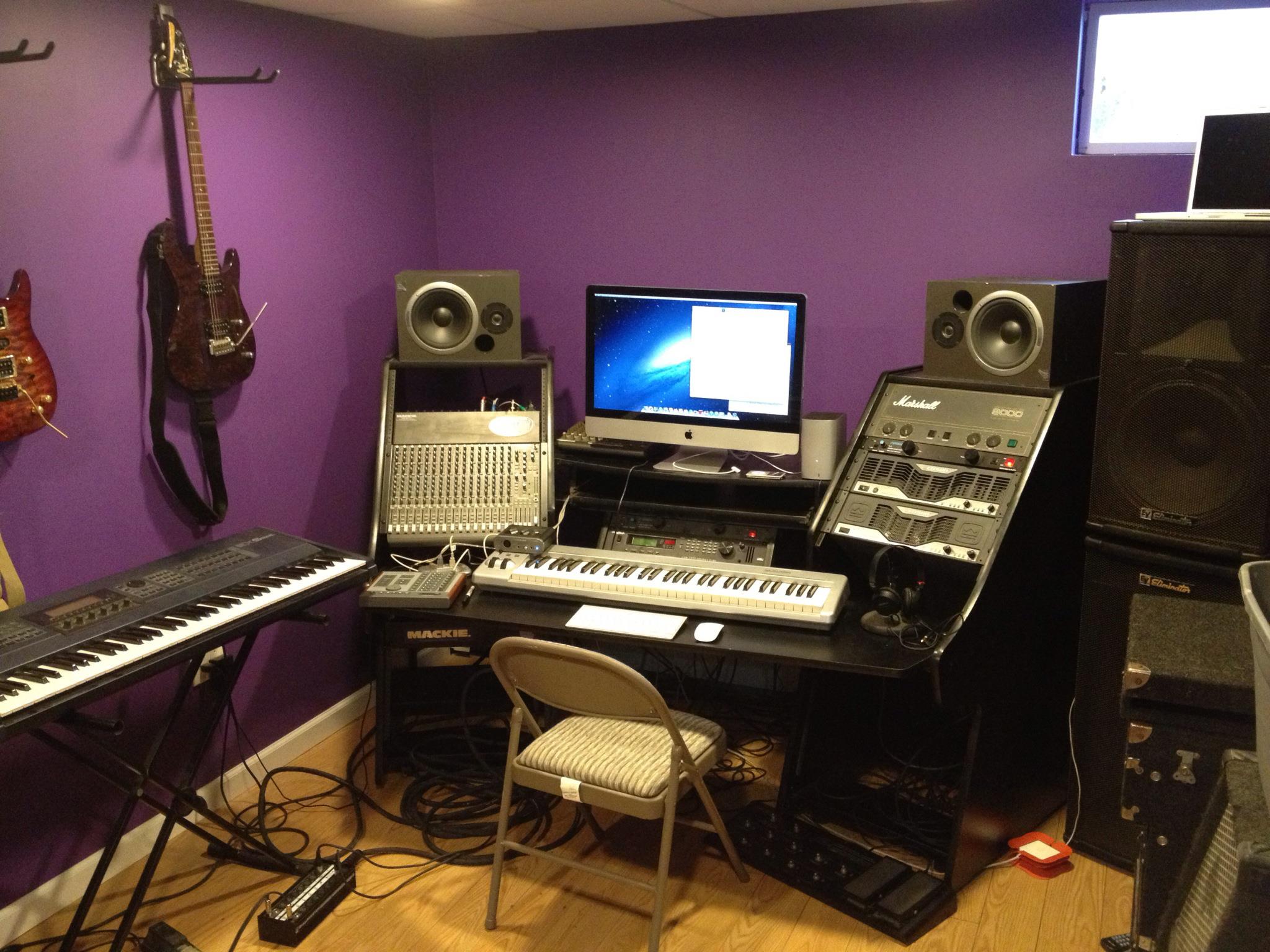
1) What you just downloaded took roughly 3.5 hours to record and mix, - from concept to finished song. And that's only because I'm not as familiar with GarageBand as I could be.
2) Recording quality-wise, you don't hear much of a difference between something like this and something that's churned out by an engineer in a professional recording studio, do you?
3) Whether it's recorded music, photography, animation, film, or what have you, the tools that churn out professional quality content in all these areas have all taken a giant leap forward, as compared to where they were 20, 10 or even five years ago.
4) These tools are now accessible to the average Joe. Figure the average musician might pay $1,200 for a decent guitar and amplifier, or for a decent MIDI keyboard. Another $500-$1,000 buys you a computer that gives you the means to record your stuff, tweak it to your heart's content, and distribute it digitally.
5) The barriers to entry shrink every day. Who knows what the entry price will be for a guy who wants to be a [musician, photographer, animation artist, filmmaker] in 3-5 years? Maybe the equivalent of $250 will get you an entry-level Macintosh with the means to produce and hawk your wares built in.
The point is, we owe the modern media landscape not just to the rise of the Internet, not just to the conversational nature of new media, but also to the production tools that are becoming easier to understand and cheaper to own every day. In 1995, I would have paid $3,000 (and did) to get a PC for digital recording. It was a 10th as powerful and 5 times more expensive than the Mac Mini I own for the same purpose today.
Remember when Bob Garfield did the rounds talking about the Chaos Scenario? About what would happen if the existing media model collapsed before something else could replace it? It was right around then that I started taking Garfield seriously. Garfield postulated at OMMA West last year that online media "wouldn't be ready" for the influx of dollars marketers were prepared to spend to find something to replace their traditional media buys, on which they spend more and more every year to achieve less and less.
We may not be ready, but I see what everyone else calls "Consumer Generated Content" (I call it Citizen Publishing) filling a big void. I see that marketers are going to have to take the risks associated with turning their brands over to potential ridicule by the masses. They're not going to have a choice - if they want to be relevant to our lives, they need to live where we live, which means they'll be as much a part of Web 2.0 as we are. The good companies will distinguish themselves by actually being meaningful participants in the conversations their customers start. The bad ones will continue to try to control the message. In short, Citizen Publishing may fill the void Garfield identified, and if that's the case, marketers will be navigating a landscape that's much more scary than the web was in 1994 (and filled with more landmines and pitfalls).
Enjoy the song.
Love,
Hespos